Fractures are a common outcome of accidents, trauma, and sports injuries. While many fractures can heal with conservative treatment such as casting and immobilization, complex fractures—which involve multiple bone fragments, joints, or soft tissue damage—often require surgical intervention. Thanks to significant advances in medical technology and surgical techniques, orthopedic surgeons can achieve excellent outcomes even in the most complicated fracture cases.
What Are Complex Fractures?
A fracture becomes “complex” when it:
- Involves multiple broken pieces (comminuted fracture)
- Affects joints (intra-articular fracture)
- Occurs in high-stress areas such as the pelvis, hip, or spine
- Has associated soft tissue injuries, nerve, or vascular damage
Results from high-energy trauma, like road accidents or industrial injuries
These fractures are more difficult to treat and require a multidisciplinary, highly specialized approach.
Challenges in Treating Complex Fractures
Unlike simple fractures that may heal with rest, complex fractures pose several challenges:
Precise alignment of bone fragments is critical to restore function and mobility.
Soft tissue involvement (ligaments, muscles, tendons) can complicate the surgical approach.
There’s an increased risk of complications such as infections, non-union (failure to heal), or malunion (improper healing).
This is where advanced surgical techniques become essential.
Modern Surgical Techniques for Complex Fracture Repair
Orthopedic experts like Dr. Ashish Suryawanshi, a leading orthopedic trauma surgeon in Pune, employ a variety of advanced tools and methods to manage such injuries. These include:
1. Minimally Invasive Surgery (MIS)
MIS involves making smaller incisions and using specialized instruments to repair fractures. Reduces tissue damage, lowers infection risk, and accelerates recovery.
Especially effective for fractures of the tibia, femur, or pelvis.
2. Locking Compression Plates (LCPs)
Locking plates are fixed to the bone with screws that “lock” into place.
Provides superior stability, particularly in osteoporotic bones or comminuted fractures. Minimizes the need for external immobilization.
3. Intramedullary Nailing
A metal rod is inserted into the marrow canal of long bones like the femur or tibia.
This method allows early weight-bearing and faster mobilization.
Often used for fractures with minimal soft tissue damage.
4. External Fixation Devices
Used when immediate internal fixation isn’t possible due to infection or swelling. Pins and rods are placed outside the body to stabilize the bone temporarily.
Ideal for open fractures and high-energy trauma cases.
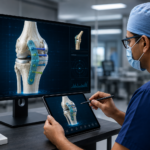
5. 3D Imaging and Navigation
Real-time imaging ensures accurate placement of implants and proper alignment.
Helps surgeons avoid nearby nerves and blood vessels.
Improves surgical outcomes and reduces revision rates.
The Role of Specialized Surgeons
Performing complex fracture surgeries requires not just advanced tools, but also experience and expertise. A skilled orthopedic trauma specialist like Dr. Ashish Suryawanshi brings years of hands-on experience, ensuring:
A personalized surgical approach based on the type and location of the fracture
Safe handling of soft tissue and preservation of joint function
Comprehensive pre- and post-operative care to minimize complications
Post-Surgical Rehabilitation
Surgery is only one part of the journey. Rehabilitation is crucial for full recovery:
- Physical therapy starts soon after surgery to restore movement and strength.
- Weight-bearing exercises are introduced gradually depending on the fracture type.
- Recovery timelines vary, but most patients resume normal activities within 3–6 months.
Benefits of Advanced Surgical Techniques
- Faster healing times
- Reduced hospital stays
- Minimal scarring
- Lower risk of infection or complications
- Improved long-term joint function and mobility
These benefits are particularly important for elderly patients, athletes, or individuals with physically demanding lifestyles.
Conclusion
The evolution of orthopedic surgery has dramatically improved outcomes for patients with complex fractures. By integrating cutting-edge technology with surgical precision, advanced techniques allow for quicker recovery, better alignment, and a lower risk of long-term complications.
If you or a loved one is dealing with a serious bone injury, it’s crucial to consult a skilled orthopedic trauma specialist. Dr. Ashish Suryawanshi, a leading orthopedic surgeon with expertise in trauma care, offers advanced treatment using the latest surgical techniques. Practicing in Thergaon and Nigdi, Pune, he is known for providing personalized and compassionate care to ensure the best possible recovery for every patient.
Recent Posts
-
Robotic vs. Traditional: Is the Extra Cost Worth It for Your 20-Year Joint Longevity?
-
 Beyond the Scalpel: Why Smaller Incisions in Robotic Surgery Lead to “Bounce-Back” Recovery
 -
 Smart Implants 2026: The Artificial Joints That “Talk” to Your Phone During Recovery.
 -
 The “Digital Twin” Advantage: How Dr. Ashish Suryawanshi Uses 3D Mapping to Rehearse Your Surgery
 -
 Biohacking Your Posture: Can Smart Wearables Really Replace a Spine Specialist’s Advice?