Myth-Busting the Bedridden Senior: Why Rest is Actually Your Joint’s Greatest Enemy
Sit down, Aaji! You shouldn’t be walking so much at your age; you’ll ruin your knees!” It’s a phrase echoed in thousands of homes across Pune every day. It comes from a place of deep love and concern, but medically speaking, it is the most dangerous advice you can give a senior. Welcome to the great orthopedic paradox: telling an older adult to “rest” to save their joints is exactly what causes those joints to fail.
Meet Sudhakar, a 72-year-old retired bank manager living in Pimpri-Chinchwad. For years, he was active, taking long walks in the local parks of Thergaon. But a few months ago, he started experiencing a dull ache in his right hip. His well-meaning children insisted he stop his walks, hire full-time help, and spend his days resting in an armchair. “You have Degenerative Arthritis,” they told him, “You need to preserve what’s left.”
Within six months, the dull ache became a sharp, constant agony. Furthermore, Sudhakar found it difficult to stand up, his balance deteriorated, and he suffered a minor fall resulting in a wrist sprain.
By trying to “save” his hip with rest, his family had inadvertently accelerated his physical decline. This is the myth of the “bedridden senior,” and Dr. Ashish Suryawanshi, a leading Orthopaedic Surgeon in Pune, fights this dangerous misconception every single day at the Insight Bone Joint & Spine Clinic.
The “Wear and Tear” Fallacy
The biggest myth driving this fear is that human joints are like the tires on a car—the more miles you put on them, the faster the tread wears out. This is fundamentally false.
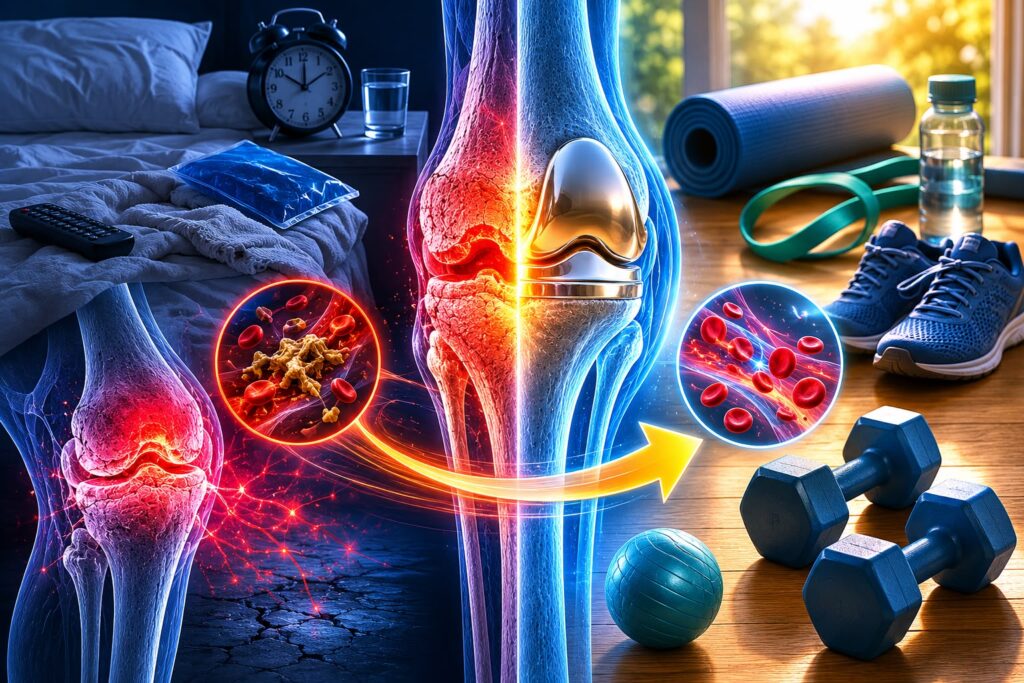
Human cartilage—the smooth, white tissue that cushions your joints—is living tissue. Unlike a car tire, cartilage doesn’t have its own blood supply. It receives oxygen and essential nutrients from the synovial fluid inside the joint. But here is the critical part: that fluid only circulates when the joint moves.
When you walk, the compression and release of your weight acts like a sponge, pumping nourishing fluid in and out of the cartilage. As experts on aging and exercise point out, total rest starves your joints. When an older adult stops moving, their cartilage dries out, becomes brittle, and cracks under the slightest pressure.
Rest is not preservation; rest is starvation.
The Domino Effect of Immobility
The damage caused by “too much rest” extends far beyond the joint itself. Let’s look at the rapid, negative cascade that occurs when seniors become sedentary:
- Muscle Atrophy (The Loss of the “Shock Absorbers”): Your muscles act as primary shock absorbers. Strong quadriceps and glutes take the impact of walking off your knees and hips. Within just a few weeks of total rest, these muscles begin to waste away. When you finally do stand up, the naked joint takes 100% of the impact, leading to sudden, sharp pain.
- The Bone Density Crisis: Bones require impact to stay strong. When they are not subjected to the stress of weight-bearing exercise (like walking), the body stops producing new bone cells. This accelerates osteoporosis, making the bones incredibly fragile. This is why Osteoporosis & Fall Prevention Awareness is a core focus at our clinic. Immobility directly leads to the fragile bones that cause devastating Orthopedic Trauma (Fractures) from minor trips.
- The Stiffening of Connective Tissue: Ligaments and tendons, crucial for stability, lose their elasticity when not stretched regularly. This stiffness limits your range of motion, making simple tasks like reaching overhead or bending to tie a shoe painful or impossible.
Redefining “Safe” Movement for Seniors in Pune
If rest is the enemy, how do we keep our seniors safe without putting them at risk? The answer isn’t telling them to run marathons; it is about supervised, intelligent, and consistent movement.
As a premier Knee, joint pain specialist in Thergaon, Dr. Suryawanshi advocates for a proactive approach:
- Move Through the Pain (Safely): “Hurt does not equal harm.” It is normal to have some discomfort when starting to move stiff, arthritic joints. Gentle, low-impact activities like swimming, stationary cycling, or even targeted stretching can break the cycle of stiffness.
- Strength Training is Mandatory: Lifting light weights or using resistance bands is not just for young athletes. Building muscle mass in your 70s is entirely possible and is the single best way to achieve Joint Preservation & Replacement avoidance.
- The “Motion is Lotion” Philosophy: Every part of the body benefits from movement. Whether it’s targeted exercises to prevent Hand & Wrist Problems (like arthritis in the fingers) or specific stretches for Foot & Ankle mobility to improve balance, the key is daily, deliberate action.
When Surgery Becomes the Pathway to Movement
Sometimes, the joint is too damaged, and the mechanical pain is too severe for conservative movement. In these cases, surgery is not a failure; it is the ultimate tool to restore movement.
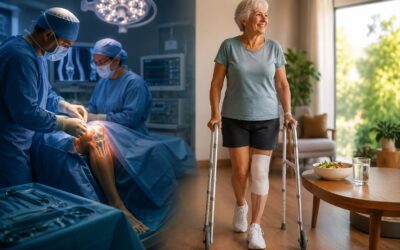
Dr. Suryawanshi specializes in Mini-Invasive Orthopedic Surgery. By minimizing muscle damage during procedures like joint replacements, patients can begin moving and walking within hours of surgery, rather than days. The goal of modern General Orthopedics is never to put you in a bed; it is to give you the structural foundation to get you out of it.
Even in complex cases like Pediatric Fractures, the modern medical consensus is to mobilize the patient as quickly and safely as possible to ensure proper healing and prevent long-term stiffness.
Get Up and Get Moving
Sudhakar’s story has a happy ending. He visited Insight Bone Joint & Spine Clinic, where Dr. Suryawanshi explained the dangers of his armchair lifestyle. With a tailored physical therapy plan and proper medical management, Sudhakar is back to taking short, daily walks in Thergaon.
Don’t let the myth of rest steal your independence. Your joints were designed to move, and they require movement to survive.
If pain is stopping you or a loved one from living an active life, don’t surrender to the armchair. Consult with the premier Fracture specialist near me. Schedule your mobility assessment with Dr. Ashish Suryawanshi today.
Clinic Contact Information
Insight Bone Joint & Spine Clinic Shop 107 to 110, B-square, Barne corner, opposite atithi pure veg restaurant, Sainath Nagar, Sector No. 34, Thergaon, Pune, Pimpri-Chinchwad, Maharashtra 411033
Phone: +91 9370671319 Email: ashishvsuryawanshi@gmail.com Website: www.drashishsuryawanshi.com
Imp Services:
- Orthopedic Trauma(Fractures)
- Degenerative Arthritis
- Joint Preservation & Replacement
- Hand & Wrist Problems
- General Orthopedics
- Pediatric Fractures
- Osteoporosis & Fall Prevention Awareness
- Foot & Ankle
- Mini-Invasive Orthopedic Surgery
Recent Posts
-
 Myth-Busting the Bedridden Senior: Why Rest is Actually Your Joint’s Greatest Enemy
-
 Kinesiophobia Demystified: Overcoming the Paralysing Fear of Moving Your New Joint.
-
 Walking by Dinner: The Shocking Reality of Same-Day Joint Replacement in 2026
-
 AI-Driven Diagnostics: How Dr. Suryawanshi Spots Micro-Fractures That Traditional X-Rays Miss
-
Robotic vs. Traditional: Is the Extra Cost Worth It for Your 20-Year Joint Longevity?