Reverse Shoulder Replacement: A Game-Changer for Rotator Cuff Injuries

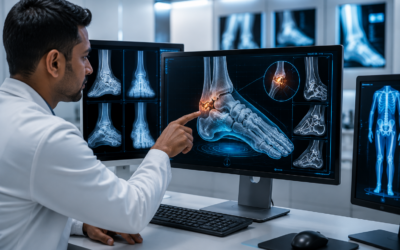
Orthopedic surgeon preparing for minimally invasive reverse shoulder replacement surgery

Introduction:

Have you been suffering from ongoing shoulder pain, weakness, or reduced mobility? Has a rotator cuff injury made it hard to lift your arm, perform activities of daily living, or sleep in comfort at night? If other treatments haven’t provided relief, it may be time to look at a life-changing solution—reverse shoulder replacement surgery.

This advanced orthopedic surgery is transforming lives for patients with unreparable rotator cuff tears and advanced shoulder arthritis, particularly those whose standard shoulder replacement is not an option.

Let’s dig in and learn about reverse shoulder replacement, who it’s for, and why it’s a game-changer for shoulder treatment.

Learning About Rotator Cuff Injuries

The rotator cuff is a collection of muscles and tendons that support your shoulder joint and enable effortless movement of your arm. These tendons can be torn as a result of:

  • Aging and degeneration
  • Repetitive overhead motion
  • Sudden injury or trauma
  • Chronic shoulder arthritis

Large or unrepairable rotator cuff tears severely impair shoulder function. Patients can feel:

  • Ongoing pain, even when resting
  • Inability to lift the arm overhead
  • Weakness or muscle atrophy
  • Decreased range of motion
  • Failed outcomes of physical therapy or injections

In these situations, typical shoulder replacement surgery just doesn’t function effectively—because it depends on a normal rotator cuff. That is where reverse shoulder replacement comes into play.

What Is Reverse Shoulder Replacement?

Unlike normal shoulder replacement (in which the ball-and-socket anatomy is preserved), reverse shoulder replacement flips the mechanics of the shoulder joint:

  • A metal ball is mounted on the shoulder blade (glenoid)
  • A plastic socket is put on top of the upper arm bone (humerus)

This construction lets the deltoid muscle, rather than the rotator cuff, move the arm—completely avoiding the torn tendons. It’s especially useful for patients with:

  • Irreparable rotator cuff tears
  • Rotator cuff tear arthropathy (arthritis + cuff tear)
  • Failed prior shoulder operations
  • Severe shoulder fractures in older patients

Advantages of Reverse Shoulder Replacement

This groundbreaking method has transformed the treatment of patients previously thought to be impossible to treat. Major advantages are:

  1. Relief of Pain: Numerous patients experience significant or total pain relief following surgery for chronic shoulder pain
  2. Function Improvement: Restores arm elevation above the head, reaching, and other activities and abilities again.
  3. More Stability: Offers joint stability even if the rotator cuff is out of commission.
  4. Long-Term Success Rates: High success and durability rates, particularly when performed by a skilled surgeon.

The Surgical Process & Recovery

The surgical process and recovery for reverse shoulder replacement are usually done under general or regional anesthesia. The surgery lasts around 1.5–2 hours, and patients spend 1–2 days in the hospital.

The recovery after surgery includes:

  • Immobilization in a sling for several weeks
  • Physiotherapy to recover motion and strength
  • Gradual restoration of normal activity within 3–6 months

Patients who adhere to rehab routines closely tend to have dramatic improvements in pain as well as function.

Is Reverse Shoulder Replacement Suitable for You?

You could be an ideal candidate for reverse shoulder replacement if you:

  • Have a rotator cuff tear, which is big or irreparable
  • Have cuff tear arthropathy
  • Have restricted arm mobility despite treatment
  • Have persistent shoulder pain
  • Use to have failed shoulder surgery
  • Are above the age of 60 with chronic shoulder problems

Prompt consultation is necessary in order to evaluate damage and decide on proper action.

Conclusion:

Reverse shoulder replacement is a life-changing option for individuals with severe shoulder issues. It not only returns movement—but quality of life. If rotator cuff damage or shoulder arthritis is keeping you on the sidelines, this operation may be the way to pain-free, active living.

Dr. Ashish Suryawanshi is a renowned orthopedic and joint replacement surgeon in Pune, specializing in advanced shoulder procedures, including total and reverse shoulder replacement. With over 2000+ successful joint surgeries, he is committed to delivering personalized care using modern, minimally invasive techniques tailored to each patient’s needs.

If you’re dealing with persistent shoulder pain or rotator cuff injury, don’t wait.

Schedule a consultation with Dr. Ashish Suryawanshi today and learn if reverse shoulder replacement is appropriate for you.

Leave a Reply

Your email address will not be published. Required fields are marked *