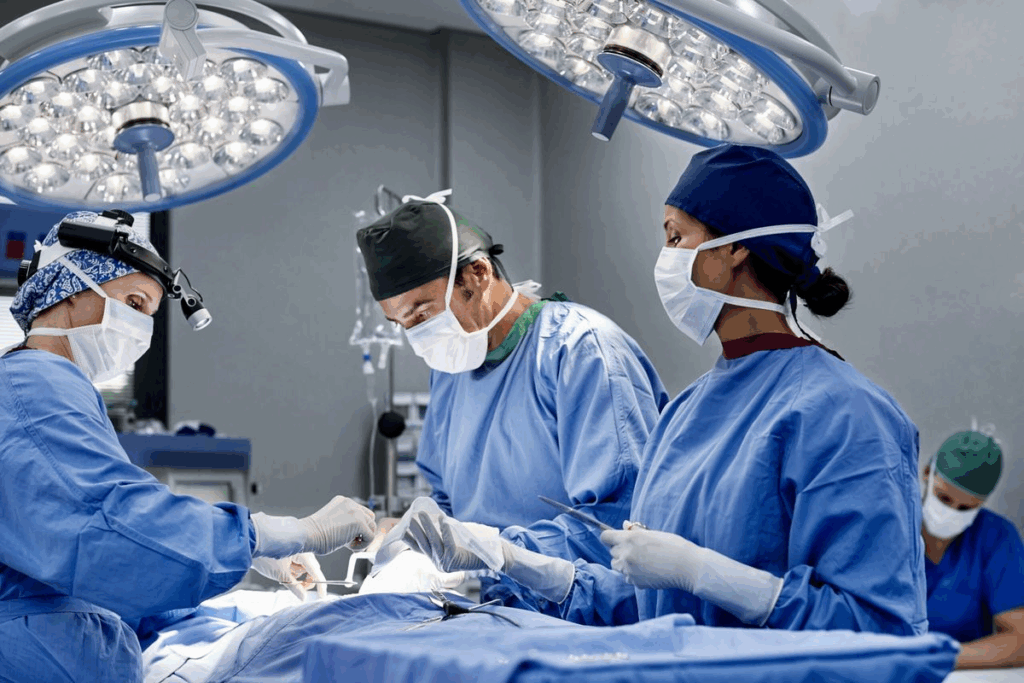
Orthopedic trauma is injury to bones, joints, muscles, ligaments, and tendons due to sudden accidents or massive forces. Complex trauma cases, such as multiple fractures, open wounds, or joint dislocations, pose special challenges for which special care is needed. Due to the developments in orthopedic surgery, patients now have enhanced treatment options, quicker recovery, and improved functional outcomes.In this blog, we look at what complex trauma is, the problems it creates, and the most recent advances in surgery that allow for successful management.
What Is Complex Orthopedic Trauma?
Complex trauma is characterized by several or severe musculoskeletal injuries. Some examples are:
Open fractures in which bone shows through the skin, posing the risk of infection.
Comminuted fractures in which bones are fractured into multiple pieces.
Polytrauma in which there is multiple body region involvement, such as combined limb and pelvic trauma.
Severe soft tissue injury with nerve or vascular damage.
These injuries need urgent and coordinated treatment to maintain limb function and avoid life-threatening complications.
Challenges in the Management of Complex Trauma
Complex orthopedic trauma is challenging to treat because:
Risk of infection is high, particularly in open fractures.
Bone healing may be delayed or compromised due to severe tissue damage.
Soft tissue reconstruction for wound coverage is frequently needed.
Achieving realignment and stability is essential for function.
Several operations may be required in the future.
Rehabilitation should be planned cautiously to maximize recovery.
Every patient needs individualized care balancing surgical treatment with supportive therapy.
Advances in Orthopedic Surgery for Complex Trauma
1. Damage Control Orthopedics (DCO)
DCO is a step-wise surgical technique that aims to stabilize the patient rapidly with minimal physiological stress. Temporary external fixation stabilizes fractures, controls hemorrhage, and prevents further injury initially. Definitive internal fixation (plates, nails, screws) is then undertaken once the patient is stabilized.
This method decreases complications such as fat embolism syndrome and enhances survival in multiply injured patients.
2. Minimally Invasive Surgical Techniques
Minimally invasive techniques employ reduced incisions and specialized tools for minimizing soft tissue trauma. Advantages are:
Decreased risk of infection
Reduced blood loss
Increased healing speed
Decreased postoperative pain
Percutaneous fixation and arthroscopy are techniques that enable precise repair with minimal exposure.
3. Advanced Imaging and 3D Planning
High-resolution CT scans and MRI give excellent visualization of complex fractures and soft tissue damage. Along with computer-assisted surgical planning and 3D printing, surgeons are able to preoperatively plan implants and guides customized to the patient’s anatomy, allowing for greater surgical accuracy.
4. Biologic Therapies
New biologics such as bone morphogenetic proteins (BMPs) and platelet-rich plasma (PRP) enhance bone regeneration and soft tissue repair. These treatments speed up healing, particularly in delayed union or nonunion fractures.
5. Limb Salvage Procedures
In the case of severe trauma to the limb that endangers its viability, microsurgical procedures can reconstruct blood vessels, nerves, and soft tissues. Free flaps are surgical procedures that move healthy tissue to cover gaps while maintaining limb function and cosmetic appearance.
6. Hybrid and External Fixators
Newer external fixator devices enable shorter healing times by stabilizing fractures but also allowing for early mobilization. Hybrid fixation integrates an internal and an external device to achieve maximum stability, particularly in periarticular fractures with multiple complexity factors.
Multidisciplinary Treatment Role
Treatment of complex trauma involves teamwork between orthopedic, plastic, vascular surgeons, physiotherapists, and critical care specialists. Complete rehabilitation through pain management, range of motion, and strength training is necessary to restore function.
When to See an Orthopedic Trauma Specialist?
If you or someone you know has:
High-impact trauma (traffic accidents, falls)
Open or several breaks
Severe tissue damage
Limb deformity or numbness
Early consultation with a skilled orthopedic trauma specialist such as Dr. Ashish Suryawanshi in Nigdi, Pimpri-Chinchwad, Maharashtra is essential for best results.
Conclusion
Multifilamentous orthopedic trauma poses formidable treatment dilemmas but recent advances in surgery have radically changed patient care. Methods like damage control orthopedics, minimally invasive approaches, biologic therapies, and 3D planning allow for accurate, efficient management of even the most grievous injuries.
In case you need professional trauma treatment, visit Dr. Ashish Suryawanshi, a top orthopedic specialist for management of trauma, joint conservation and reconstruction in Nigdi, Pimpri-Chinchwad, Maharashtra. His experience and state-of-the-art technology make sure of personalized care according to your requirements, so that you can have mobility and lifestyle restored again.
Recent Posts
-
 Smart Implants 2026: The Artificial Joints That “Talk” to Your Phone During Recovery.
 -
 The “Digital Twin” Advantage: How Dr. Ashish Suryawanshi Uses 3D Mapping to Rehearse Your Surgery
 -
 Biohacking Your Posture: Can Smart Wearables Really Replace a Spine Specialist’s Advice?
 -
 The “Commuter’s Back”: How Pune’s Traffic Jams are Accelerating Your Spinal Wear and Tear.
 -
 :Blue Light & Bone Density: The Surprising Link Between Late-Night Shifts and Weakened Joints