Best Sleeping Positions for Lower Back Pain Relief
Lower back pain is a very common issue that affects people across all age groups. For many, the discomfort becomes more noticeable at night, especially when the spine isn’t properly supported during sleep. The way you sleep can directly impact your pain levels, sleep quality, and recovery.
If your back pain is persistent, it’s always wise to consult a specialist to understand the root cause and get the right treatment.
Why Your Sleeping Position Matters
Your spine has a natural curve when you stand or sit. But while sleeping, the wrong position can disturb this alignment and put extra stress on your lower back.
A good sleeping posture can help:
- Keep your spine properly aligned
- Reduce pressure on lower back discs
- Relax surrounding muscles
- Improve blood circulation
- Prevent stiffness in the morning
Even small changes in how you sleep can bring noticeable relief over time.
Best Sleeping Positions for Lower Back Pain Relief
- Sleeping on Your Back with Knee Support
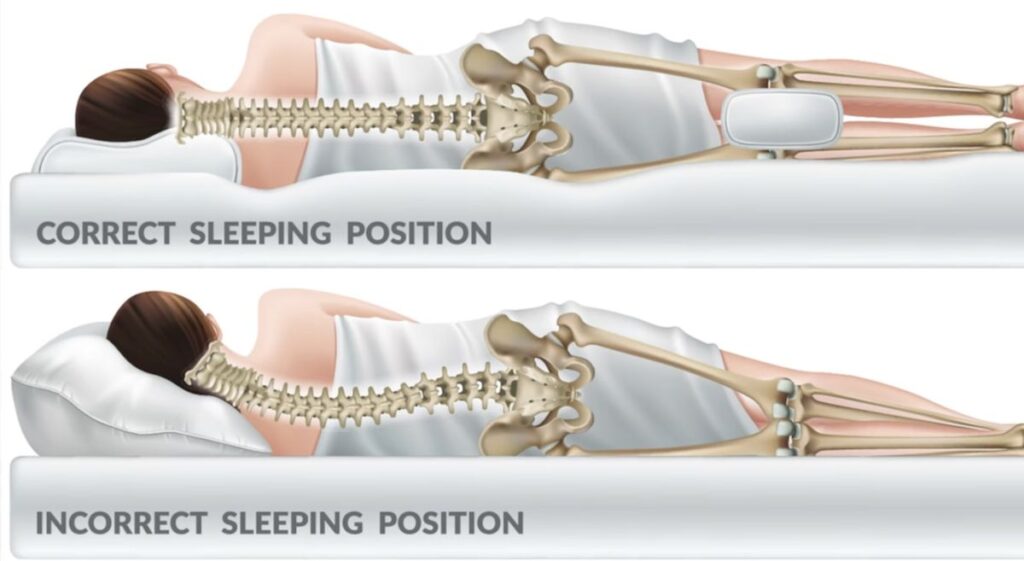
Sleeping on your back is one of the best positions for your spine. However, placing a pillow under your knees is important. This helps maintain the natural curve of your lower back and reduces strain.
It also helps distribute your body weight evenly, making it ideal for people dealing with muscle strain or disc-related issues.
- Side Sleeping with a Pillow Between Knees
Sleeping on your side is another great option. Placing a pillow between your knees helps keep your hips, pelvis, and spine aligned.
This prevents your lower back from twisting and reduces stress on the joints. It’s especially helpful for people who sit for long hours or experience back pain after physical activity.
- Fetal Position for Disc-Related Pain
Gently curling your body into a fetal position can help reduce pressure on spinal discs.
To do this correctly:
- Lie on your side
- Bring your knees slightly toward your chest
- Keep your body relaxed without curling too tightly
This position can provide relief for people dealing with conditions like a herniated disc or sciatica.
- Sleeping on Your Stomach (Avoid If Possible)
Sleeping on your stomach is generally not recommended. It puts unnecessary strain on both your neck and lower back by forcing your spine into an unnatural position.
If you can’t avoid this position, placing a thin pillow under your lower abdomen may help reduce some pressure—but it’s still better to switch to a healthier posture over time.
Choosing the Right Mattress and Pillow
Your sleeping setup plays a major role in back pain relief.
Mattress Tips:
- Go for a medium-firm mattress for proper support
- Avoid very soft mattresses that cause your body to sink
- Avoid overly hard surfaces that create pressure points
Pillow Tips:
- Keep your neck aligned with your spine
- Use a pillow that is supportive but not too high
- Add extra pillows for knee or back support if needed
Additional Tips for Night-Time Back Pain Relief
- Stretch Before Bed
Gentle stretching or light yoga can relax tight muscles and improve flexibility.
- Use Heat Therapy
A warm compress or heating pad before sleep can ease stiffness and improve comfort.
- Avoid Heavy Meals at Night
Heavy meals can disturb sleep and indirectly affect your sleeping posture.
- Stay Physically Active
Regular walking and core-strengthening exercises help support your spine and reduce long-term pain.
When Should You See a Doctor?
It’s important to seek medical advice if:
- Pain lasts more than two weeks
- Discomfort increases at night
- You feel numbness or tingling in your legs
- Movement becomes difficult
- Home remedies are not helping
Early diagnosis can prevent the problem from becoming more serious.
Conclusion
The way you sleep has a direct impact on your lower back health. Positions like sleeping on your back with knee support, side sleeping with a pillow between your knees, and the fetal position can help reduce pain and improve comfort. On the other hand, stomach sleeping should be avoided as much as possible.
Along with the right sleeping posture, choosing a good mattress, staying active, and maintaining healthy habits can significantly improve your condition.
If your back pain continues despite these changes, consulting a specialist is the best step toward long-term relief.
Dr. Ashish Suryawanshi
Orthopaedic Surgeon | Knee Pain & Joint Pain Specialist
Clinic 1:
Insight Bone Joint & Spine Clinic, Thergaon, Pune
Phone: +919370671319
Clinic 2:
Lokmanya Hospital, Nigdi Pradhikaran, Pimpri-Chinchwad
Phone: +919370671319
Recent Posts
-
Robotic vs. Traditional: Is the Extra Cost Worth It for Your 20-Year Joint Longevity?
-
 Beyond the Scalpel: Why Smaller Incisions in Robotic Surgery Lead to “Bounce-Back” Recovery
 -
 Smart Implants 2026: The Artificial Joints That “Talk” to Your Phone During Recovery.
 -
 The “Digital Twin” Advantage: How Dr. Ashish Suryawanshi Uses 3D Mapping to Rehearse Your Surgery
 -
 Biohacking Your Posture: Can Smart Wearables Really Replace a Spine Specialist’s Advice?